Kik is a messaging app built around usernames instead of phone numbers, which lets you chat without sharing your real name or number. Alongside text, GIFs, stickers, and photos, it includes a built-in video chat feature for both one-on-one and group conversations.
Kik's video chat works differently from most apps. Instead of taking over the whole screen, the video appears as a small floating bubble inside the chat, so you can keep typing and sharing content while you talk face to face.
This guide walks through starting a video call, running a group call, managing your camera and mic, and what to do when video chat will not connect.
What You Need Before You Start
Video chat is part of the standard Kik app on iPhone and Android, so there is nothing extra to install. Make sure you are running the latest version, since older builds can miss features or behave unpredictably. Check the App Store or Google Play for an update before you begin.
You also need a working internet connection, ideally Wi-Fi or a stable mobile data signal, because video uses more bandwidth than plain messaging. The first time you start a video chat, your phone will ask for camera and microphone access. You must allow both for the other person to see and hear you.
How to Start a Video Call on Kik
Starting a video call happens from inside a conversation, not from a separate calling screen. Open the chat with the person you want to reach first.
- 1.Open the Kik app and make sure you are signed in to your account.
- 2.Tap the conversation with the friend you want to video chat with.
- 3.Tap the camera button in the top right corner of the chat.
- 4.The video chat toggles on and a small bubble appears at the top of the screen.
- 5.Wait for your friend to tap in and join the call.
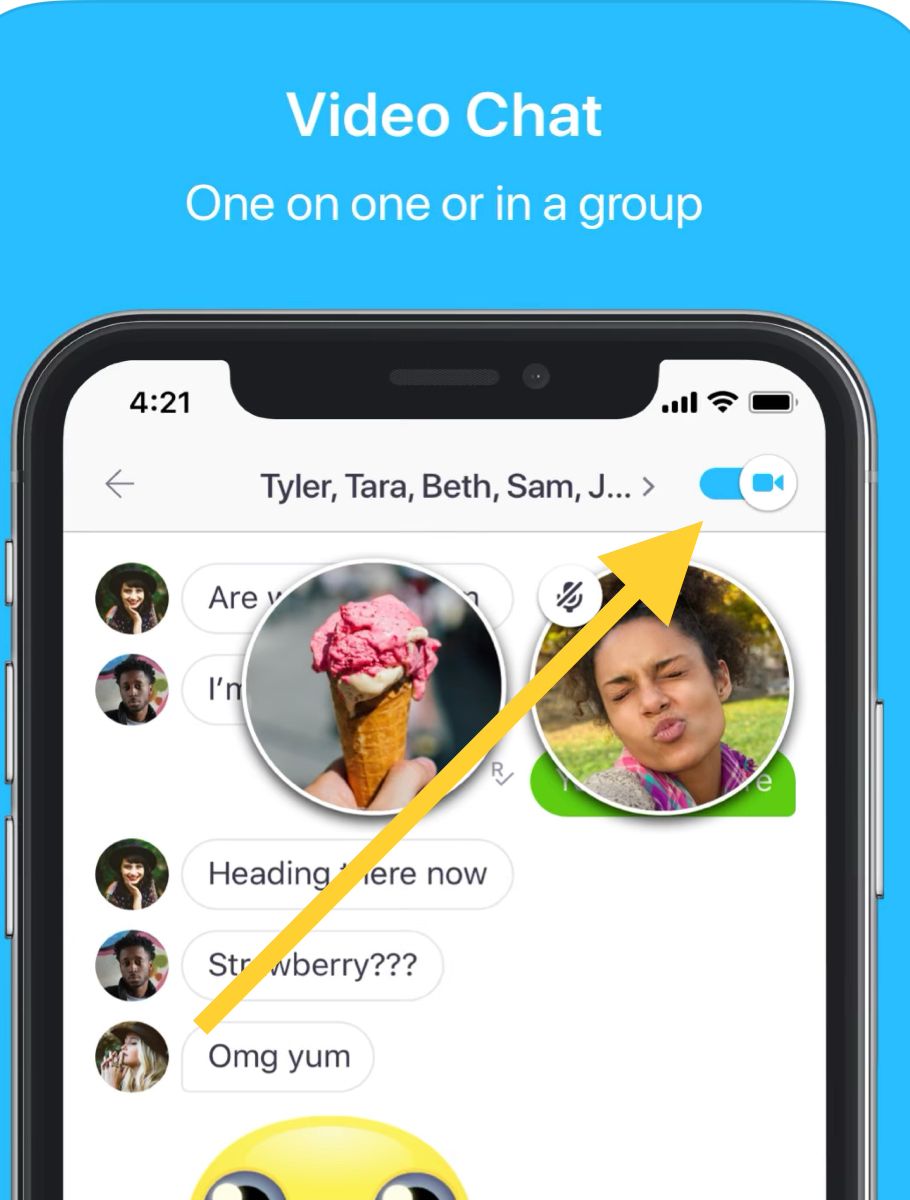
Once your friend joins, their video appears as a floating bubble over the chat. Because the call does not fill the screen, you can keep sending messages, photos, stickers, and GIFs while you talk. Swipe or tap the bubble for a larger view when you want to focus on the call.
How to Make a Group Video Call
Group video chat works the same way as a one-on-one call, just inside a group conversation. Open the group, then tap the camera button in the top right corner to turn video chat on for everyone.
Group video chat supports up to six people at once. As each person joins, their video bubble appears on every participant's screen, so the call grows as more friends tap in. This is separate from a group's overall membership, which can hold many more people in the text chat.
Anyone in the group can join the video chat once it is active, and the floating bubbles keep the text conversation visible the whole time. People who do not join can still follow along through messages.
Mute and Manage a Call
You can mute participants directly from the call. Tap a person's video bubble to bring up the controls, then use the mute icon to silence them on your end. Tap again to unmute when you want to hear them.
Muting yourself is useful when there is background noise or you need a moment of quiet without leaving the call. Because the video stays in a bubble, you stay in control of the conversation while everyone remains connected.
To leave or end the video chat, tap the camera or video toggle again to turn it off. Doing this drops you out of the call while the rest of the chat continues.
When Kik Video Chat Will Not Connect
If a video call fails to start or freezes, the cause is usually permissions, your connection, or an outdated app. Start with the quick checks before reinstalling anything.
First, confirm Kik has camera and microphone access. On iPhone go to Settings > Kik and turn on Camera and Microphone. On Android open Settings > Apps > Kik > Permissions and enable both. Without these, the other person cannot see or hear you.
Next, test your connection by switching between Wi-Fi and mobile data, or toggle airplane mode off and on to reset the signal. If a single contact will not connect, try a different friend to see whether the problem is on their side.
If issues continue, update Kik to the latest version, restart your phone, and clear the app cache. As a last resort, uninstall and reinstall Kik, then sign back in and try the call again.
Staying Safe on Kik Video Chat
Because Kik lets people connect by username without a phone number, you do not always know who is on the other end of a chat. The app is popular with younger users, so it pays to be cautious about who you accept calls from.
Only video chat with people you know and trust, and be careful about sharing personal details, your location, or anything you would not want recorded. If someone makes you uncomfortable, you can mute, leave the call, and block or report them from the chat.
Frequently Asked Questions
Does Kik still have video calls in 2026
Yes. Kik includes built-in video chat for one-on-one and group conversations. You start a call by tapping the camera button in the top right corner of a chat rather than from a separate calling screen.
How many people can join a Kik group video call
A Kik group video chat supports up to six participants at once. A group's text chat can hold many more members, but only six can appear in the live video at the same time.
Why can my friend not see or hear me on a Kik call
This is almost always a permissions issue. Make sure Kik has access to your camera and microphone in your phone's settings, and confirm the other person has not muted you. A weak internet connection can also block the video and audio.
Do I need a phone number to use Kik video chat
No. Kik uses a username and email address to register instead of a phone number, and video chat works the same way. You only need the other person's Kik username to start a call.
Why does the Kik video appear as a small bubble
That is by design. Kik keeps the video in a floating bubble instead of filling the screen so you can keep messaging, sharing photos, and sending GIFs during the call. Tap or swipe the bubble for a larger view.
How do I leave a Kik video call
Tap the camera or video toggle in the chat again to turn video chat off. This removes you from the call while the rest of the conversation stays open.
First published October 17, 2025. Last updated June 4, 2026.