A good soundbar transforms thin, tinny TV audio into something you can actually enjoy without cranking the volume. The Samsung HW-C450 is the best all-around pick at this price, but the right choice depends on whether you want room-shaking bass, true surround sound, or just clearer dialogue.
Product
Technobezz is supported by its audience. We may get a commission from retail offers.
Best Soundbars Under $300 for 2026
The Samsung HW-C450 is the best all-around pick at this price, but the right choice depends on whether you want room-shaking bass, true surround sound, or just clearer dialogue.
T
Technobezz
Senior Editor
Updated June 6, 2026Jun 6, 2026
•12 min read

Get Deals Like These in Your Inbox
The best prices, reviewed weekly.
At a Glance
| Category | Product | Why We Picked It |
|---|---|---|
| Best overall | Samsung HW-C450 | Solid 2.1 performance with DTS Virtual:X and a wireless subwoofer |
| Best surround | Vizio 5.1 Soundbar SE | True 5.1 surround system with Dolby Atmos, DTS:X, and wireless subwoofer at an excellent price |
| Best for dialogue | Bose TV Speaker | Compact bar with dedicated dialogue enhancement |
| Best bass | JBL Bar 2.1 Deep Bass (MK2) | 300W max output with a 6.5-inch wireless subwoofer and HDMI ARC for deep, room-filling bass |
| Best compact | Sony S100F | Slim 35.4-inch design with S-Force Pro surround |
| Best standalone option | Sony HT-S2000 | Compact 3.1 channel all-in-one bar with Dolby Atmos, DTS:X, built-in woofers, and HDMI eARC |
| Also recommended | Ultimea Poseidon M60 | Budget-friendly 5.1 soundbar with Dolby Atmos, 300W output, and wired subwoofer |
| Also recommended | Samsung HW-B630F | 3.1 channel system with a dedicated center speaker for superior dialogue clarity |
How we chose and tested
We evaluated soundbars based on audio clarity, bass response, connectivity options, build quality, and value for money across multiple professional reviews and user feedback. Our assessment prioritizes models that deliver noticeable improvements over built-in TV speakers without adding complexity. We looked for consistent praise across sources regarding dialogue intelligibility, subwoofer integration, and ease of setup. Room size and channel configuration were factored in to match recommendations to real living spaces.
The best soundbars under $300 right now
Samsung HW-C450 - Best overall
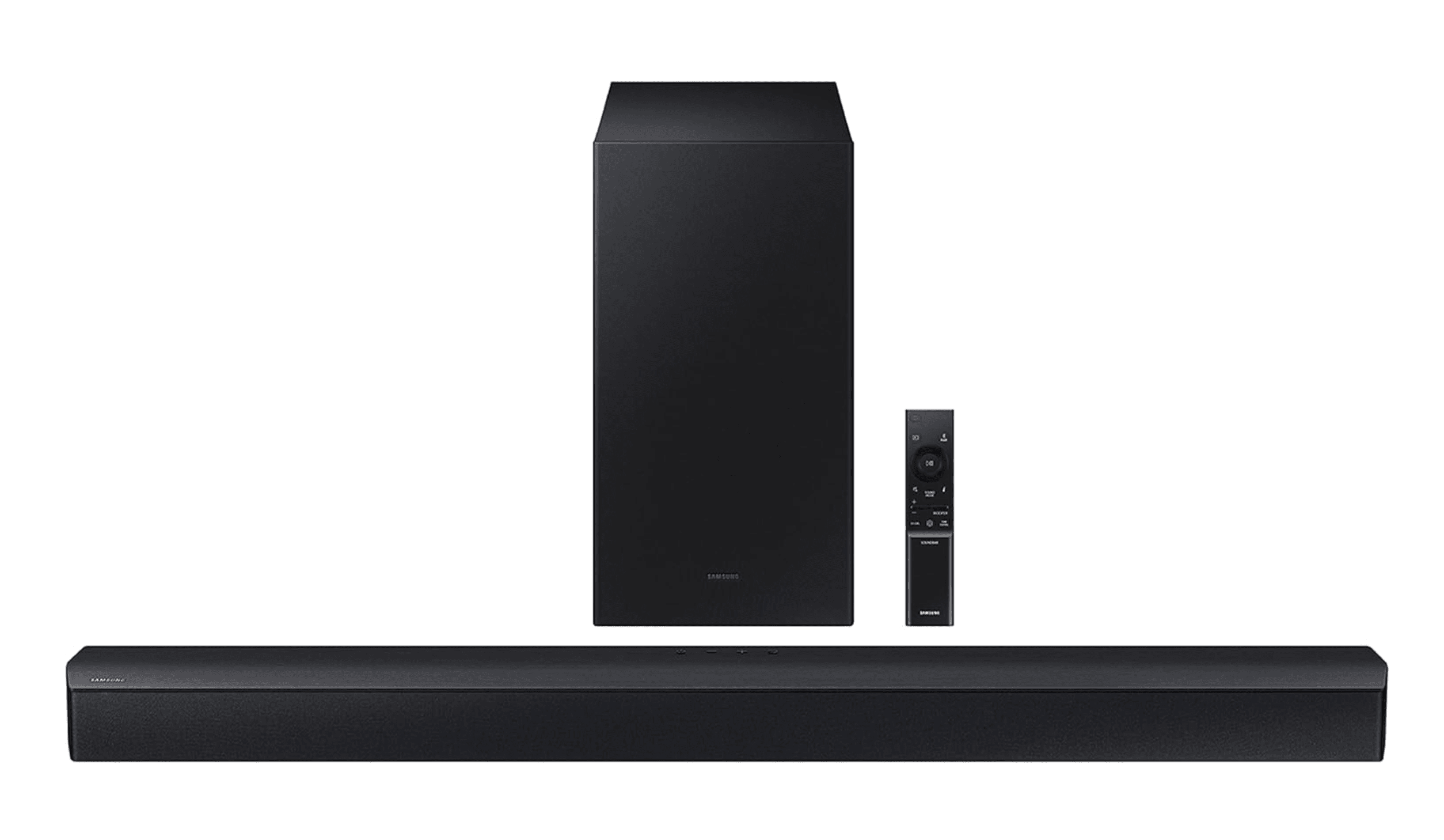
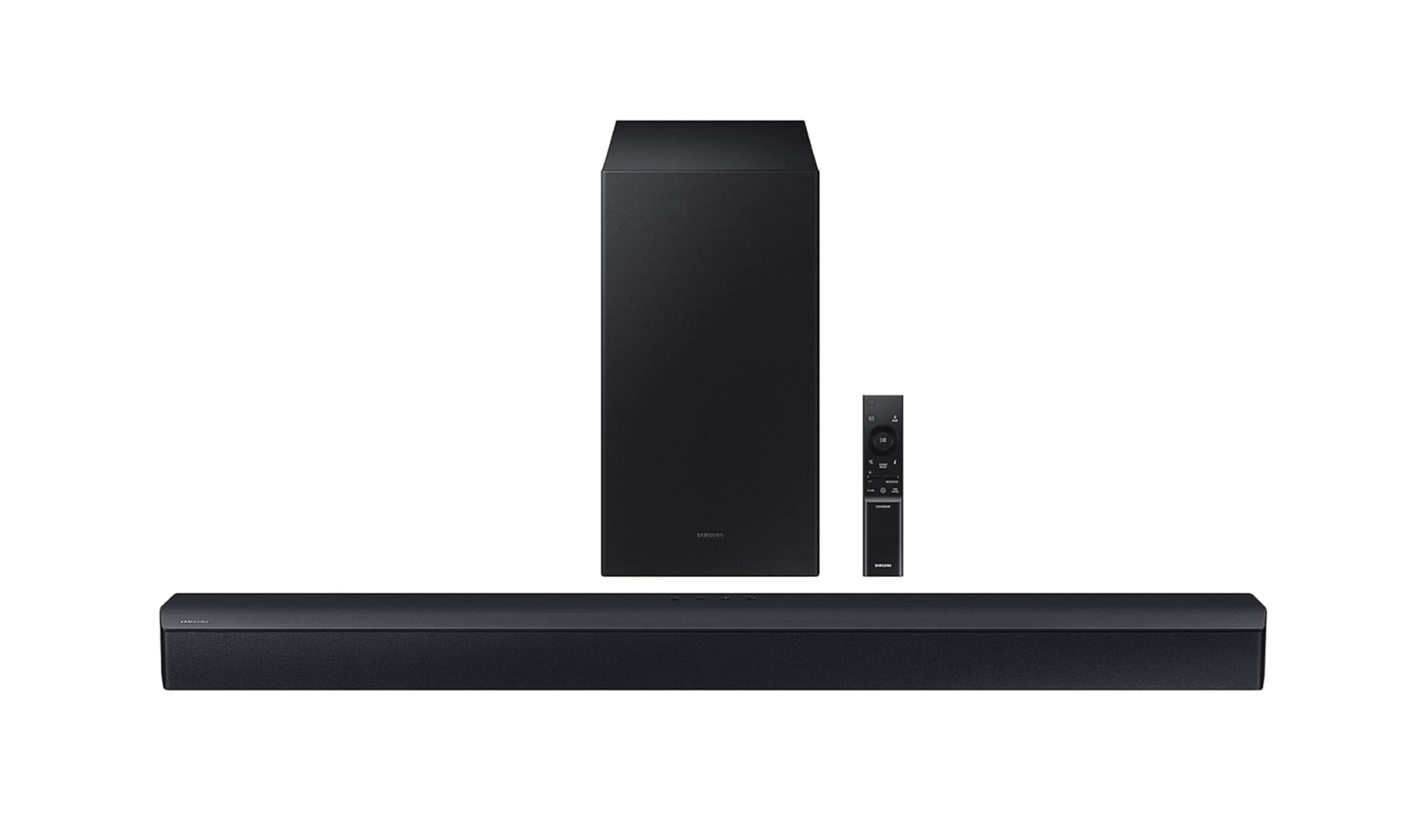
The Samsung HW-C450 hits the sweet spot of price, performance, and features. This 2.1 channel system includes a wireless subwoofer and DTS Virtual:X processing that creates a convincing sense of height and space during movies. Dialogue comes through clearly thanks to Adaptive Sound Lite, which adjusts audio based on what you are watching. The subwoofer pairs automatically and delivers punchy bass down to about 45Hz, enough to make action scenes feel substantial without overwhelming a medium-sized room. Setup takes minutes, and if you own a Samsung TV, the One Remote integration makes daily use effortless.
Key highlights
- 2.1 channel configuration with wireless subwoofer
- DTS Virtual:X creates immersive 3D surround effects
- Adaptive Sound Lite auto-adjusts EQ for different content
- Game Mode tightens response for gaming
- Bluetooth Multi Connection keeps two devices paired
Pros
- Excellent value for the money
- Punchy, well-controlled bass from the subwoofer
- Seamless pairing with Samsung TVs
- Clear dialogue even in busy scenes
Cons
- Remote feels basic
- No Dolby Atmos support
- May feel underpowered in rooms over 400 square feet
- No on-screen display for settings
Who it is for: First-time soundbar buyers who want a significant upgrade over TV speakers without spending much. Works best in small to medium rooms up to 250 square feet.
Skip if
You have a large open-concept living room or need true surround sound with rear speakers. Audiophiles wanting a neutral sound signature should look at pricier options.
Vizio 5.1 Soundbar SE - Best for surround sound
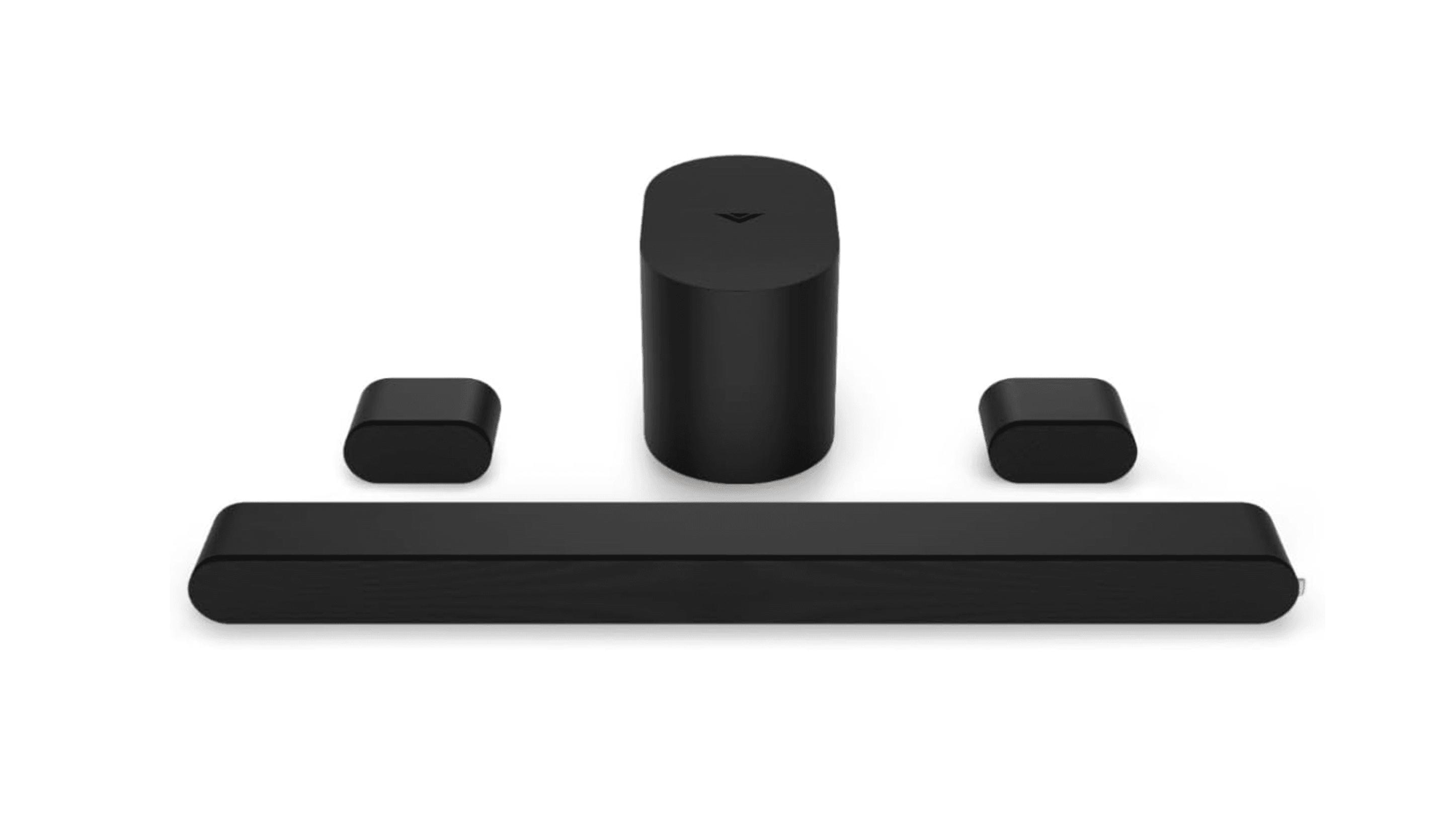
Getting a true 5.1 system with Dolby Atmos and DTS:X support at this price point is rare, but the Vizio 5.1 Soundbar SE delivers exactly that. The package includes a soundbar, wireless subwoofer, and two rear surround speakers that create an immersive bubble of audio. During action movies, effects move from the front to the back of the room convincingly. The height effects from Dolby Atmos content add a sense of vertical space that 2.1 systems cannot match. The Vizio mobile app gives you extensive EQ controls, letting you fine tune the sound to your room.
Key highlights
- True 5.1 channel system with rear surround speakers
- Supports Dolby Atmos and DTS:X audio formats
- Wireless subwoofer; 96dB total system output
- QuickFit mounting for compatible Vizio TVs
- App-based EQ with extensive customization
Pros
- Incredible value for a complete surround system
- Rear speakers create genuine wraparound sound
- Dolby Atmos height effects add immersion
- Compact subwoofer fits easily in most rooms
Cons
- No physical remote included (requires app)
- Rear speakers must be wired to the subwoofer
- App setup requires creating a Vizio account
- Cables running to rear speakers can be a trip hazard
Who it is for: Movie enthusiasts who want immersive surround sound without paying a significant premium. Works best in medium to large rooms where you can place rear speakers behind seating.
Skip if
You cannot run wires to rear speaker positions or you prefer a simpler plug and play setup. Apartment dwellers with thin walls should consider a 2.1 system instead.
Bose TV Speaker - Best for dialogue clarity
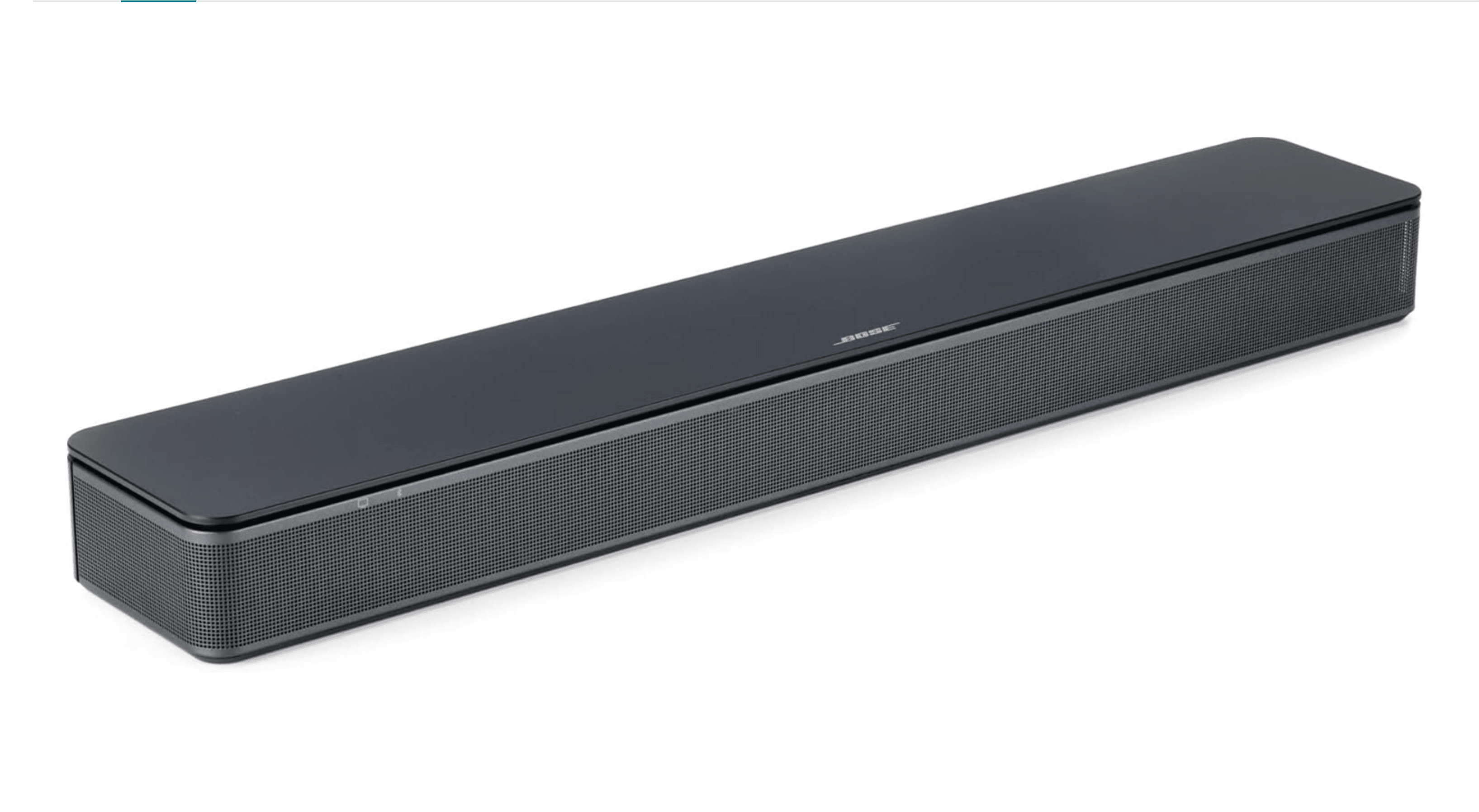
The Bose TV Speaker is built around one goal: making TV dialogue easier to understand. Two angled full-range drivers and a center tweeter work together to lift vocal frequencies out of the mix. The dedicated Dialogue Mode sharpens speech without making it sound processed or artificial. At just over 2 inches tall and 23 inches wide, this compact bar fits under most TVs without blocking the screen or IR sensor. Setup is as simple as it gets: one optical cable (included) or HDMI connection to your TV and you are running in minutes.
Key highlights
- 2.0 channel all-in-one design with center tweeter
- Dialogue Mode enhances vocal clarity
- Compact at 2.2 inches tall, fits under most TVs
- HDMI ARC and optical inputs for easy setup
- Expandable with Bose Bass Module later
Pros
- Outstanding dialogue clarity at any volume
- Simple plug and play setup with included optical cable
- Compact size works in tight spaces
- HDMI CEC lets your TV remote control volume
Cons
- No subwoofer included (bass is limited)
- Bluetooth 4.2 is older and can have latency
- No Wi-Fi or app control
- Pricier for the features you get compared to competitors
Who it is for: Anyone who struggles to hear dialogue during movies and TV shows. Perfect for bedrooms, dens, and apartments where simplicity matters more than bass impact.
Skip if
You want deep bass for action movies or need a system that fills a large living room. The Bose TV Speaker focuses on clarity, not punch.
JBL Bar 2.1 Deep Bass (MK2) - Best for bass performance
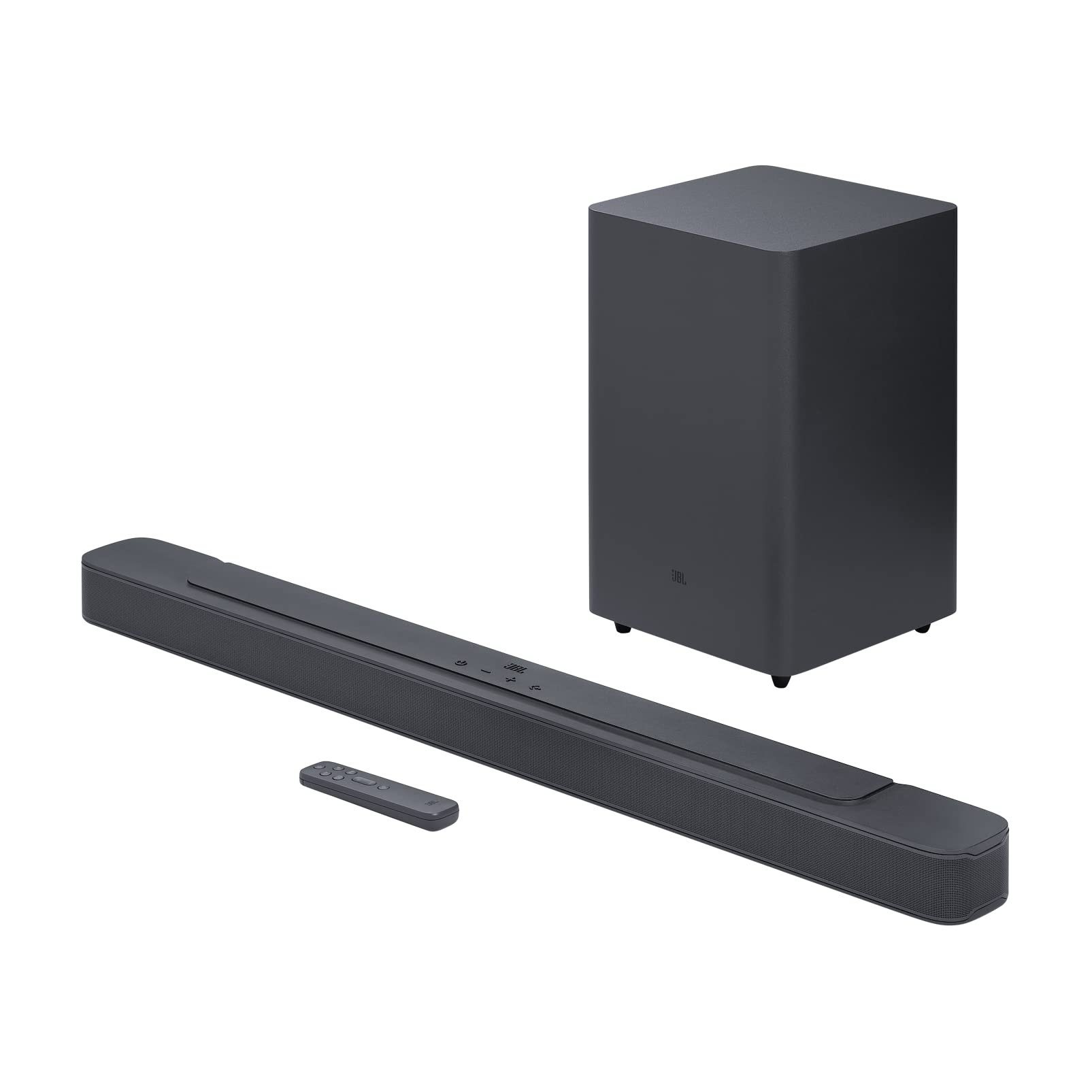
JBL built the Bar 2.1 Deep Bass MK2 around its 6.5-inch wireless subwoofer, and that focus shows. The sub delivers tight, punchy low-end that fills a living room and gives action scenes and music real weight. The 300W max output, split between the bar and the subwoofer, leaves plenty of headroom for medium to large rooms. The soundbar itself uses four racetrack drivers paired with two tweeters for clear detail, while three bass levels on the remote let you ease off for late night viewing or push it forward on movie night. HDMI ARC and Bluetooth pairing are quick and stable, and JBL Surround Sound widens the soundstage beyond the physical bar.
Key highlights
- 2.1 channel system with a 6.5-inch wireless subwoofer
- 300W max total output across the bar and subwoofer
- Four racetrack drivers paired with two tweeters in the bar
- HDMI ARC, optical, USB, and Bluetooth inputs
- Dolby Digital decoding with JBL Surround Sound and three bass levels
Pros
- Deep, room-filling bass from the large 6.5-inch subwoofer
- HDMI ARC pairs cleanly and Bluetooth stays stable
- Simple remote with dedicated buttons for each input
- Compact bar fits neatly under most TVs
Cons
- Only a single HDMI input limits connecting multiple devices
- No Wi-Fi streaming or app-based control
- Sound tuning is limited to low, medium, and high bass
- Front display scrolls settings and cannot be switched off
Who it is for: Bass lovers who want to feel action movies and music. Perfect for medium to large rooms where impactful low frequencies matter most.
Skip if
You live in an apartment with thin walls or want fine-grained EQ control. The JBL is built for punch and simplicity, not detailed tuning.
Sony S100F - Best compact design
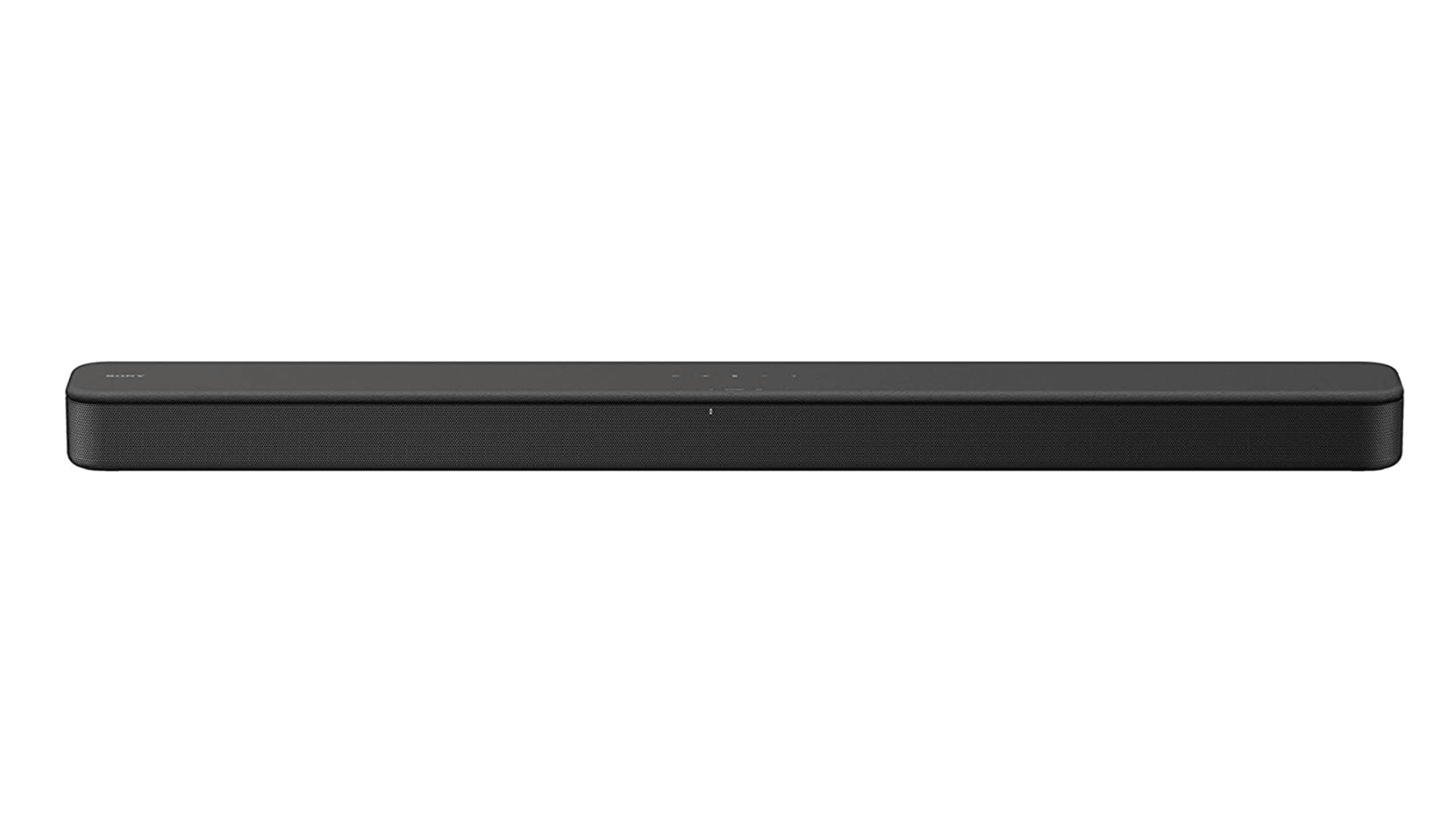
The Sony S100F proves that good things come in small packages. At roughly 35.4 inches wide, it is one of the most compact soundbars in this price range, making it ideal for smaller TVs and tight media consoles. Despite its size, the 120W output with Bass Reflex speaker delivers surprisingly full sound. S-Force Pro Front Surround processing creates a wide stereo image that extends beyond the physical bar. The included remote has a Night Mode that compresses dynamic range for late night viewing, a feature usually reserved for pricier models.
Key highlights
- Compact 35.4-inch width fits under compatible TVs
- 120W output with Bass Reflex speaker
- S-Force Pro Front Surround for wide soundstage
- Night Mode for low-volume late night listening
- HDMI ARC with CEC for TV remote control
Pros
- Space-saving size works in tight setups
- Clear, balanced sound for the size
- Easy setup with HDMI ARC or optical
- Night Mode is genuinely useful
Cons
- Limited bass without a separate subwoofer
- No Wi-Fi connectivity
- Not loud enough for large rooms
- Voice mode can disable ARC in some configurations
Who it is for: Anyone with a smaller TV or limited shelf space who wants a clear audio upgrade. Works great in bedrooms, offices, and apartments.
Skip if
You want deep bass or need to fill a large living room. The S100F is designed for compact spaces, not home theaters.
Sony HT-S2000 - Best standalone option
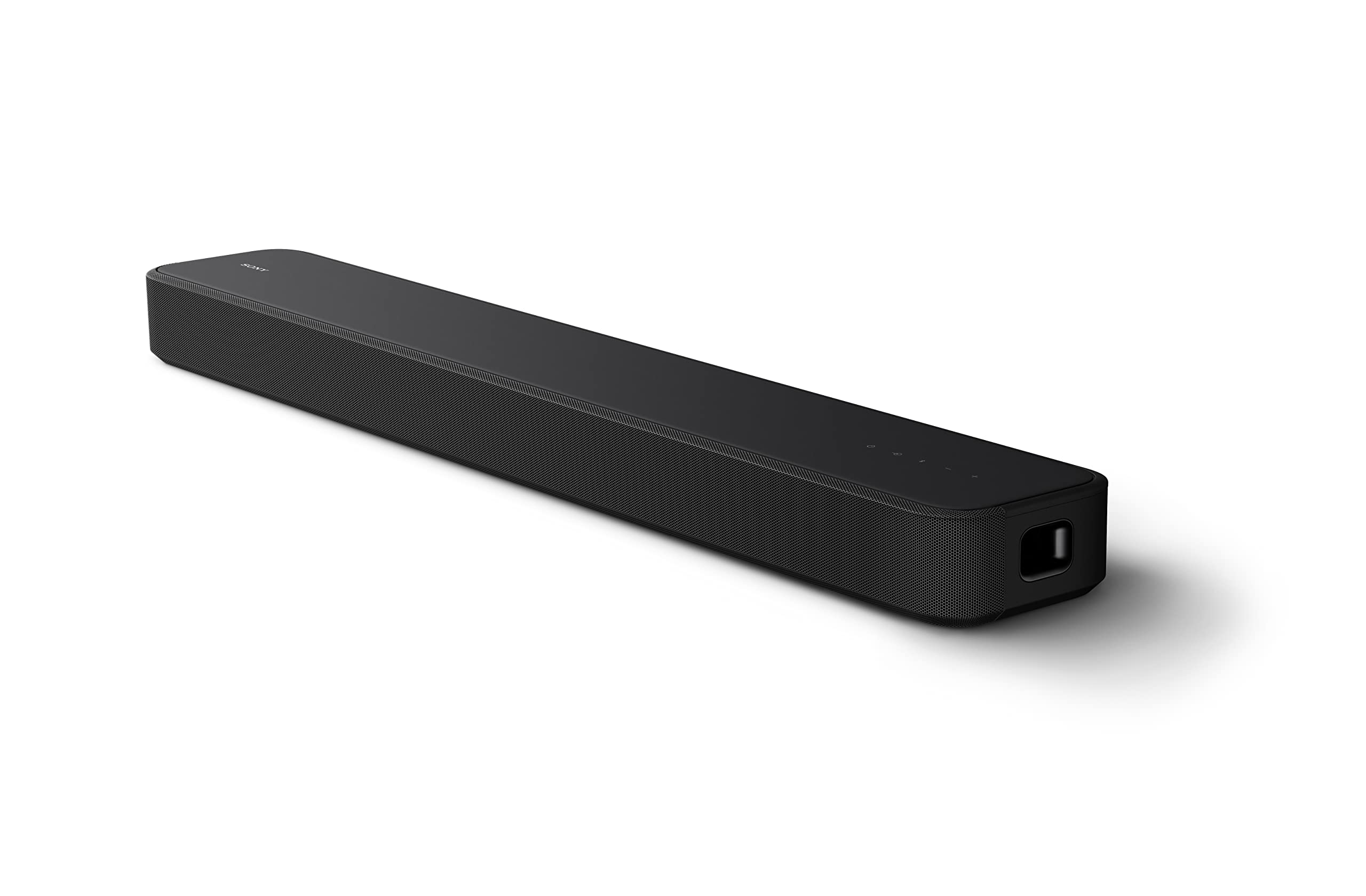
The Sony HT-S2000 packs 3.1 channel audio with Dolby Atmos and DTS:X into a compact 31.5-inch bar that needs no separate subwoofer. Five internal drivers, including two dedicated woofers, deliver 250W of clean, layered sound that punches well above the bar's compact size. Sony's Vertical Sound Engine processes spatial audio formats to simulate height and depth without upward-firing tweeters, keeping the bar slim enough to clear most TV stands. HDMI eARC ensures full lossless audio passthrough from compatible TVs, and Bluetooth 5.2 handles wireless music without dropout. The HT-S2000 also supports optional Sony wireless rear speakers and a wireless subwoofer, giving you a clear upgrade path without replacing the bar itself.
Key highlights
- 3.1 channel all-in-one design with two built-in woofers and 250W total output
- Dolby Atmos and DTS:X support via Sony Vertical Sound Engine
- HDMI eARC for full lossless audio passthrough
- Bluetooth 5.2 for stable wireless music streaming
- Expandable with optional Sony wireless rear speakers and subwoofer
Pros
- Strong bass for an all-in-one bar with no separate subwoofer required
- Dolby Atmos and DTS:X at a competitive price point
- HDMI eARC delivers higher quality audio than standard ARC
- Slim profile fits easily under most TVs without blocking the IR sensor
Cons
- No upward-firing drivers, height effects rely entirely on processing
- No Wi-Fi or multi-room audio support
- Expanding with Sony wireless rear speakers adds significant cost
- Physical controls are limited to a few buttons on the bar itself
Who it is for: Buyers who want Dolby Atmos performance in a single compact bar without cords or a separate subwoofer cluttering the room. A good fit for small to medium spaces and anyone who wants a clear upgrade path to a full wireless surround system later. Note: this soundbar normally retails above this article's budget bracket and qualifies here only at its frequently available sale price, so confirm current pricing before purchasing.
Skip if
You need a physical subwoofer included in the box for deep bass impact, or want Wi-Fi streaming for a multi-room setup. Large rooms over 400 square feet may benefit from a system with more drivers or a dedicated external subwoofer.
Also Good
- Ultimea Poseidon M60 - budget-friendly 5.1 soundbar with Dolby Atmos, 300W output, and wired subwoofer.
- Samsung HW-B630F - 3.1 channel system with a dedicated center speaker for superior dialogue clarity.
How to Choose
- Channel configuration matters. A 2.1 system (two speakers plus a subwoofer) is sufficient for most small to medium rooms. Go with 5.1 if you have the space for rear speakers and want true surround sound. The extra channels make a real difference for action movies and gaming.
- Room size determines power needs. A compact soundbar that sounds great in a 12x12 bedroom will feel thin in a large open-concept living room. Measure your space and add about 25% more power capacity for rooms over 300 square feet.
- HDMI ARC is worth prioritizing. This connection lets your TV remote control the soundbar volume and powers the bar on and off with your TV. Optical cables work but require juggling a second remote. If your TV supports HDMI ARC, use it.
- Dialogue enhancement varies by brand. Some soundbars have dedicated dialogue modes that genuinely improve speech clarity. Others just boost the overall volume. If watching dialogue-heavy content is your main use, prioritize models with proven voice enhancement features.
- Subwoofer placement affects bass quality. Wireless subwoofers give you flexibility to place them where they sound best, usually in a corner for deeper bass. Wired subs limit placement but avoid pairing issues. Consider your room layout before choosing.
FAQ
Is a soundbar under $300 worth buying?
Absolutely. Even an entry-level soundbar delivers dramatically better audio than built-in TV speakers. Modern flat TVs have tiny drivers that fire downward or backward, producing thin, muddy sound. A soundbar with front-facing drivers and a subwoofer solves this immediately.
Do I need Dolby Atmos at this price?
Not really. Budget Atmos soundbars use virtual processing to simulate height effects, which works fine in rooms with flat ceilings under 9 feet. Dialogue clarity and overall sound quality matter more than Atmos at this price point. Save it as a nice bonus, not a deciding factor.
Can I use a soundbar with an older TV?
Yes. Most soundbars under $300 include optical inputs that work with any TV made in the last 15 years. If your TV has HDMI ARC, use that for better audio quality and single remote control. Optical cables are often included in the box.
How important is a separate subwoofer?
Very important for movies and music. Soundbars without subwoofers struggle to reproduce frequencies below 80Hz, which means explosions lack impact and music sounds thin. A 2.1 system with a wireless subwoofer is the sweet spot for most buyers at this budget.
Will rear surround speakers work in a small room?
Yes, but placement matters. In rooms under 200 square feet, rear speakers can be placed on side tables or shelves behind the seating area. If you cannot run wires to the back of the room, stick with a 2.1 system that uses virtual surround processing instead.
Published May 19, 2026 Last updated June 6, 2026
Share this article
More in News
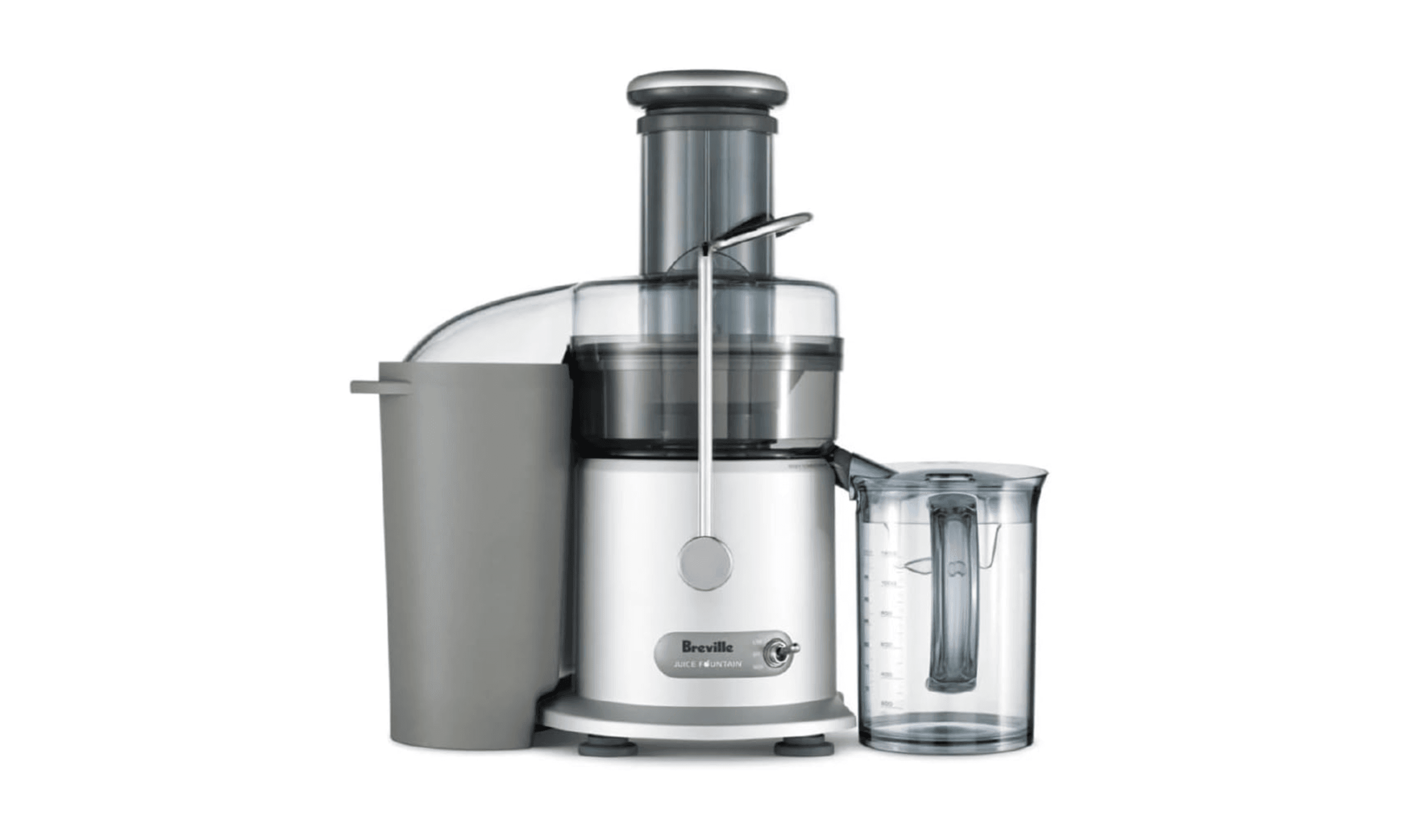
Best Juicer Machines in 2026
Nama J2 Cold Press Juicer leads our picks for 2026. See the best juicers for value, citrus, and large batches in our tested roundup.
3 min read

8 Best Gaming Steering Wheels for 2026
Logitech G29/G920 leads our 2026 picks for the best gaming steering wheels. Compare top models from Logitech, Thrustmaster, and Fanatec for every budget.
4 min read
8 Best Action Cameras for 2026
GoPro Hero13 Black leads our picks for 2026. Compare top action cameras from DJI and Insta360 for low light, value, and 360 video.
3 min read
6 Best Air Fryers in 2026
Instant Vortex leads our picks for the best air fryers in 2026. Compare top models for value, family size, and versatile toaster-oven styles.
5 min read
Yamaha HPH-100B closed-back headphones now available for $48 at Amazon
5 min read

2 Hisense Mini-LED TV deals hit new lows starting at $748.99
3 min read
9 Best laptops for home use in 2026
4 min read
8 Best Noise Cancelling Headphones to Buy in 2026
4 min read
8 Best Anti-Glare TVs for 2026
3 min read
2 smartwatch deals under $249 that caught our attention today
3 min read
LG gram Thin Lightweight Copilot+ PC drops to $1787 at Amazon
5 min read
Samsung Galaxy S25 FE Cell Phone drops to $649.99, down from $749.99
4 min read